The current political climate has brought us a destructive tariff regime and deportation thuggery as well as a profound extension of the mass surveillance state. Even the current winter climate isn’t cooperating as New York City is poised to experience a blizzard that might dump two feet of snow on the metropolitan area.
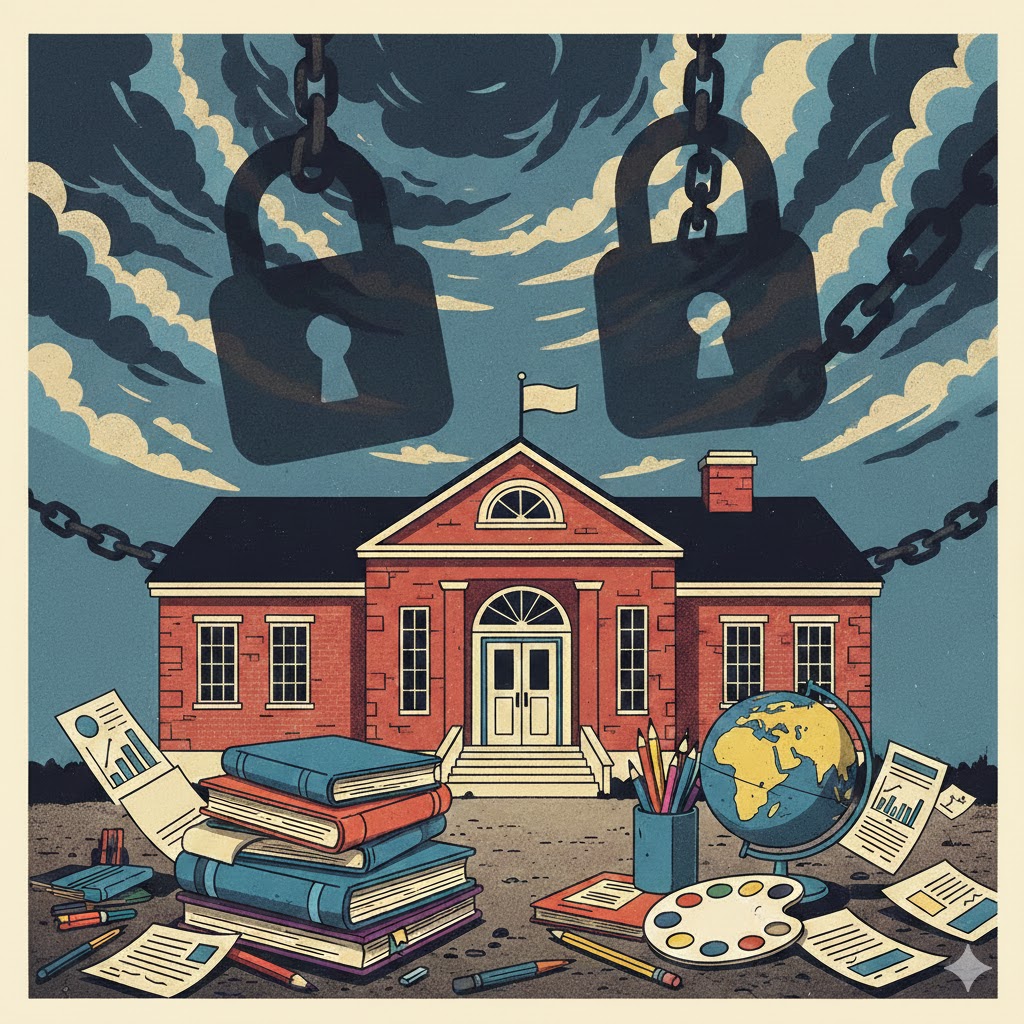
But another issue hits even closer to home (H/T to my friend Irfan Khawaja, who brought this story to my attention). It appears that the legislature in New Hampshire—a state declared in December 2025 as the “freest place in North America”—has passed a bill that bans “leftist indoctrination” and “LGBTQ+ teaching in public schools.”
But wait, there’s more!
House Bill 1792, known as the CHARLIE Act (in a nod to assassinated conservative activist Charlie Kirk) is designed to “ban certain types of instruction and punish teachers who carried it out.” CHARLIE is an acronym for “Countering Hate And Revolutionary Leftist Indoctrination in Education Act.”
Previous attempts to enact such a law were struck down as unconstitutionally vague. This one prohibits public schools, school districts, or any “public employee acting in an official capacity” from engaging in “the pedagogy, praxis, or inculcation” of certain doctrines. Aside from the typical right-wing bugaboos, like “critical race theory” and LGBTQ+ “affirmation”, the bill prohibits the teaching of any “critical theories or related practices that promote division, dialectical world-views, critical consciousness or anti-constitutional indoctrination” (emphasis added).
You got that? “Dialectical world-views”. On this logic, any book in my own “Dialectics and Liberty Trilogy” can be prohibited from the curriculum. Indeed, the finale of that trilogy, Total Freedom, has a red-flag subtitle: “Toward a Dialectical Libertarianism.”
Dialectical thinking is a crucial component of critical thinking. As I have written:
Dialectics is the art of context-keeping. It counsels us to study the object of our inquiry from a variety of perspectives and levels of generality, so as to gain a more comprehensive picture of it. That study often requires that we grasp the object in terms of the larger system within which it is situated, as well as its development across time. Because human beings are not omniscient, because none of us can see the “whole” as if from a “synoptic” godlike perspective, it is only through selective abstraction that we are able to piece together a more integrated understanding of the phenomenon before us—an understanding of its antecedent conditions, interrelationships, and tendencies.
In social theory, the object of our inquiry is society: social relations, institutions, and processes. Society is not some ineffable organism; it is a complex nexus of interrelated institutions and processes, of volitionally conscious, purposeful, interacting individuals—and the unintended consequences they generate.
Alas, the right-wing zealots know that critical, dialectical thinking is also a component of radical thinking. And it is the radical that they most fear.
To be radical is to go to the root. But genuine radical thinking is not reductionist in its search for “the root”. Radical thinking begins with the conditions that exist as a means to fundamentally altering them. Problems in a complex social setting can only be understood within the larger contexts in which they are embedded. We will often discover that one problem is connected to a whole network of many problems, each of which is an extension and expression of the others and the system that they jointly constitute. In essence, a dialectical sensibility lies at the heart of radical thinking, strategizing, and activism. Dialectics provides us with critical techniques that enable us to better process and integrate vast amounts of information across disciplines, while improving our understanding of the problems we face, and our exploration of the means by which to resolve them both systemically and dynamically. Understanding the complexities at work within any given society is a prerequisite for changing it.
And that is why “dialectical worldviews” are so threatening to the forces of reaction. These laws strike at the heart of a student’s ability to think critically, fundamentally, radically. As I have argued, the “anti-woke crusaders” are so obsessed with ‘owning the libs’, that their self-righteous indignation and hatred of the ‘woke left’ has trumped any alleged love they claim to have for freedom.
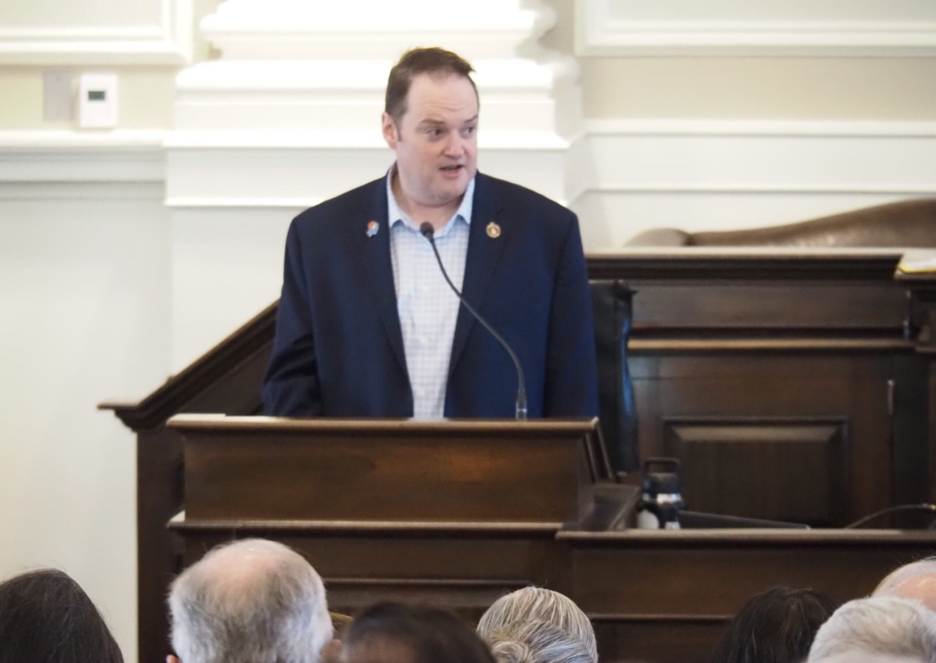
Opponents of the bill rightfully see it as an attempt “to stifle nuanced discussions in classrooms and create a climate of fear for English and social studies teachers,” which would “lead only to costly litigation for the state and further division around public schools.” One Republican, Rep. Matt Coker from Meredith, New Hampshire (below), summed up the opposition succinctly. Disturbed by “the pattern” at work, he explains that when
One side gains power, it immediately looks for ways to silence the other side, to restrict ideas, and to control what can be discussed. To punish what makes it uncomfortable. We criticized the left when they were doing this, and now we’re trying to do this. … I’m not going to replace ‘left woke’ with ‘right woke.’ And that’s exactly what this bill does.
These folks aren’t content with pushing their agenda in New Hampshire alone. Similar legislative actions have been taken in more than 20 states across the country, with some demanding religious instruction and the display of the Ten Commandments as crucial to “core Americian principles.” (Heck, even teaching Plato is woke at Texas A&M University and must be banned!)
Libertarians will argue, of course, that the solution is to abolish the public schools so that we’re not haggling over what is taught in the classrooms. But these are the conditions that exist: Public schools are not going anywhere anytime soon. As the Pew Research Center indicates, “the vast majority of the country’s roughly 54.6 million public, private and charter school students in pre-K through 12th grade (83%) attended traditional public schools. Another 10% were enrolled in private schools, and 7% went to public charter schools.” Thus, bills like this, which claim to shield millions of those students in this country from objectionable content and method, can only stunt their education, while promoting self-censorship among teachers.
What we are witnessing is an attack on intellectual independence and critical thinking, including those radical, “dialectical worldviews” deemed so dangerous.

 Notablog