Last week marked the eightieth anniversary of the dropping of atomic bombs on the cities of Hiroshima and Nagasaki, a shocking turn in the final weeks of the deadliest war in human history. With its expanded use of military technology, that war claimed the lives of somewhere between 70 and 85 million people — the vast majority of whom were civilians. No war was more costly or more dramatic in fundamentally changing the ways in which people lived and died.
The Second World War had a profound impact on my family. From countless conversations that I’d had over the years with my parents, uncles, aunts, cousins, and friends, I knew that the war experience had been brutal on so many levels, both at home and abroad. I knew that some had paid the ultimate price in key battles of that war, while others returned home to families that were changed forever. I had even formally interviewed one of my uncles for a school project that illuminated the difficulties of military service—difficulties faced not only on the field of battle but in the aftermath, as postwar traumatic stress altered the quality of life and of life’s relationships.
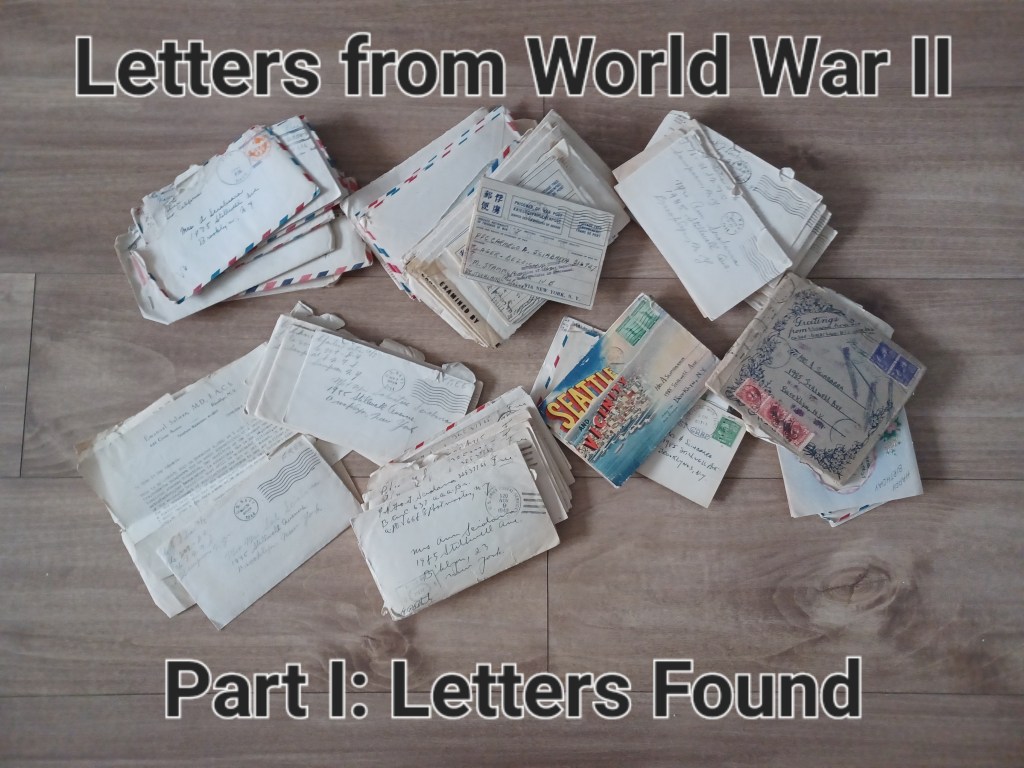
And yet, nothing quite prepared me for the education I’d receive upon discovering and reading scores of letters, which my mother had saved, written during the war — transporting me back to a time and place that enabled me to feel the daily trials and tribulations of a generation in ways that I could never have imagined.
Today begins a four-part series, “Letters from World War II,” which is published exclusively on Medium. Every Tuesday through September 2—the eightieth anniversary of the formal Japanese surrender in Tokyo Bay that marked the unofficial end of the Second World War— I will post another installment in this weekly series.
Part I: Letters Found (Medium link)
Series Installments
Part I: Letters Found (August 12, 2025)
Part II: Frank J. Rubino (August 19, 2025)
Part III: George & Charlie (August 26, 2025)
Part IV: The Navy Boys (September 2, 2025)

 Notablog